Without Haiqu AgenticOS
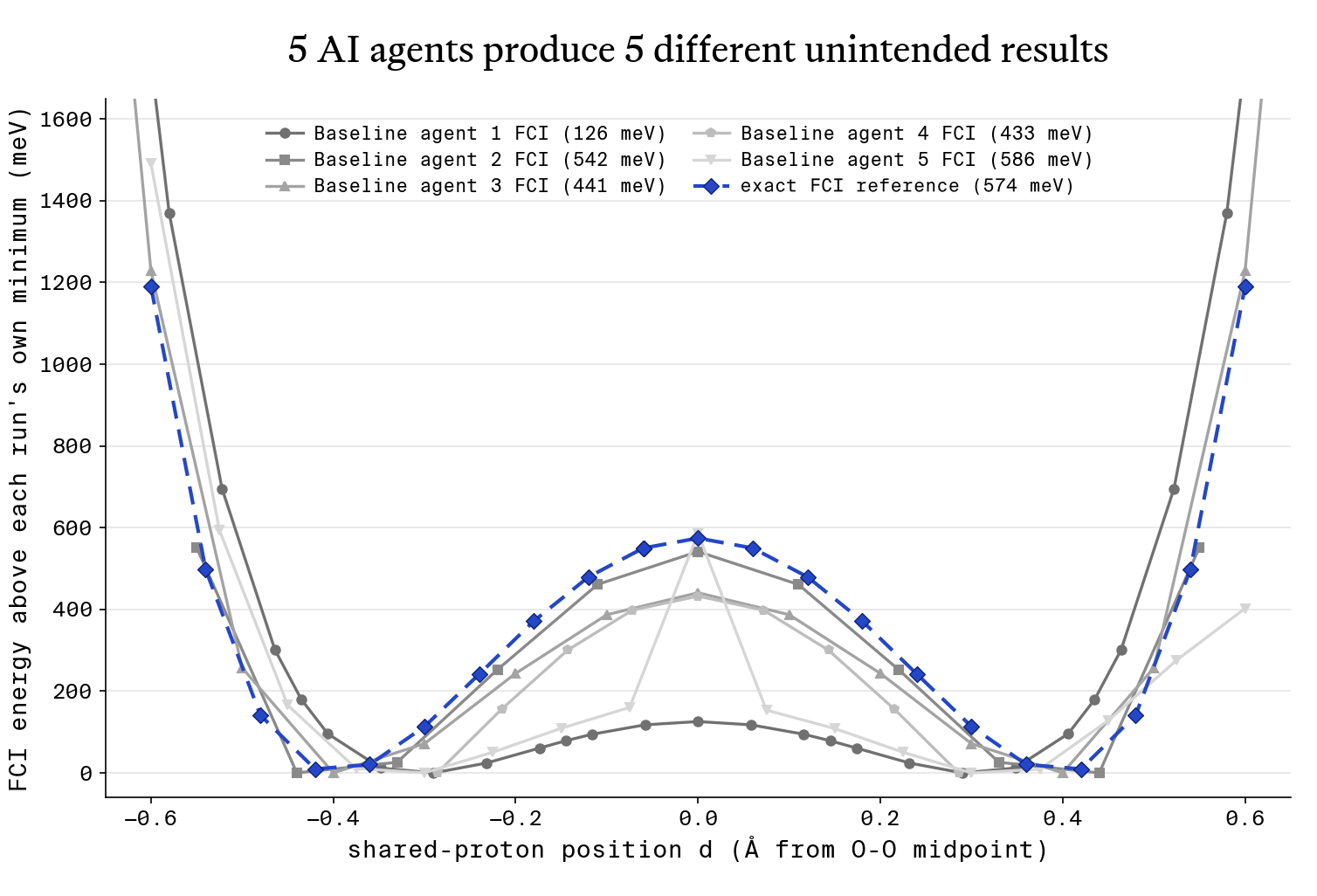
- 3 of 5 runs ignored explicit instructions
- Geometry drifted from what was asked
- 5 runs, 5 different answers
Result
Failed
What took your team weeks now takes hours, as specialized AI agents investigate, build, test, and run quantum experiments end-to-end, visible and verifiable at every step.
Every stage produces something you can inspect, version, and test, so nothing you didn’t approve quietly carries forward.
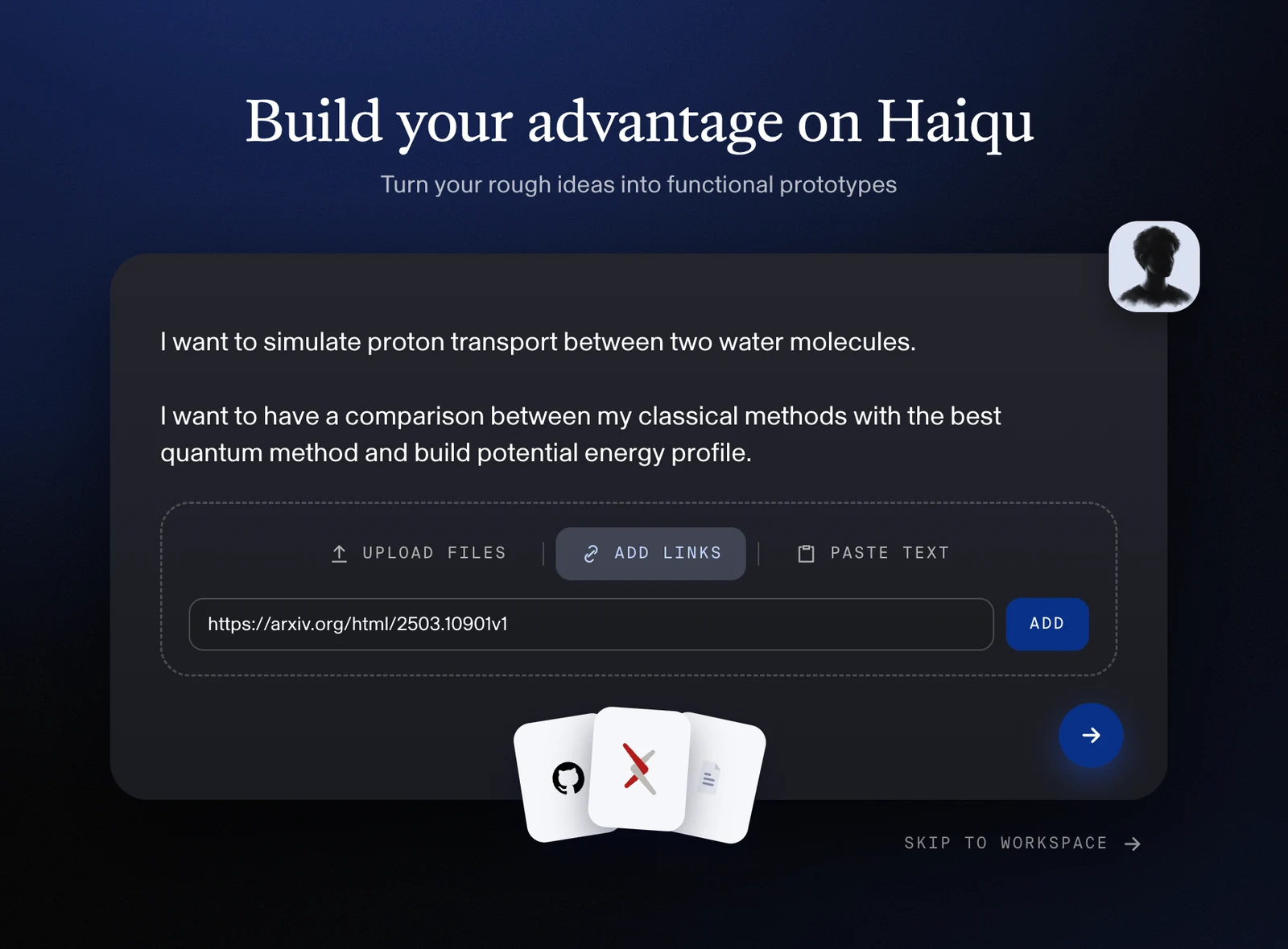
Start from a research question, papers, data, or an existing idea. Haiqu AgenticOS helps clarify the objective, constraints, success criteria, and the research needed to test it.
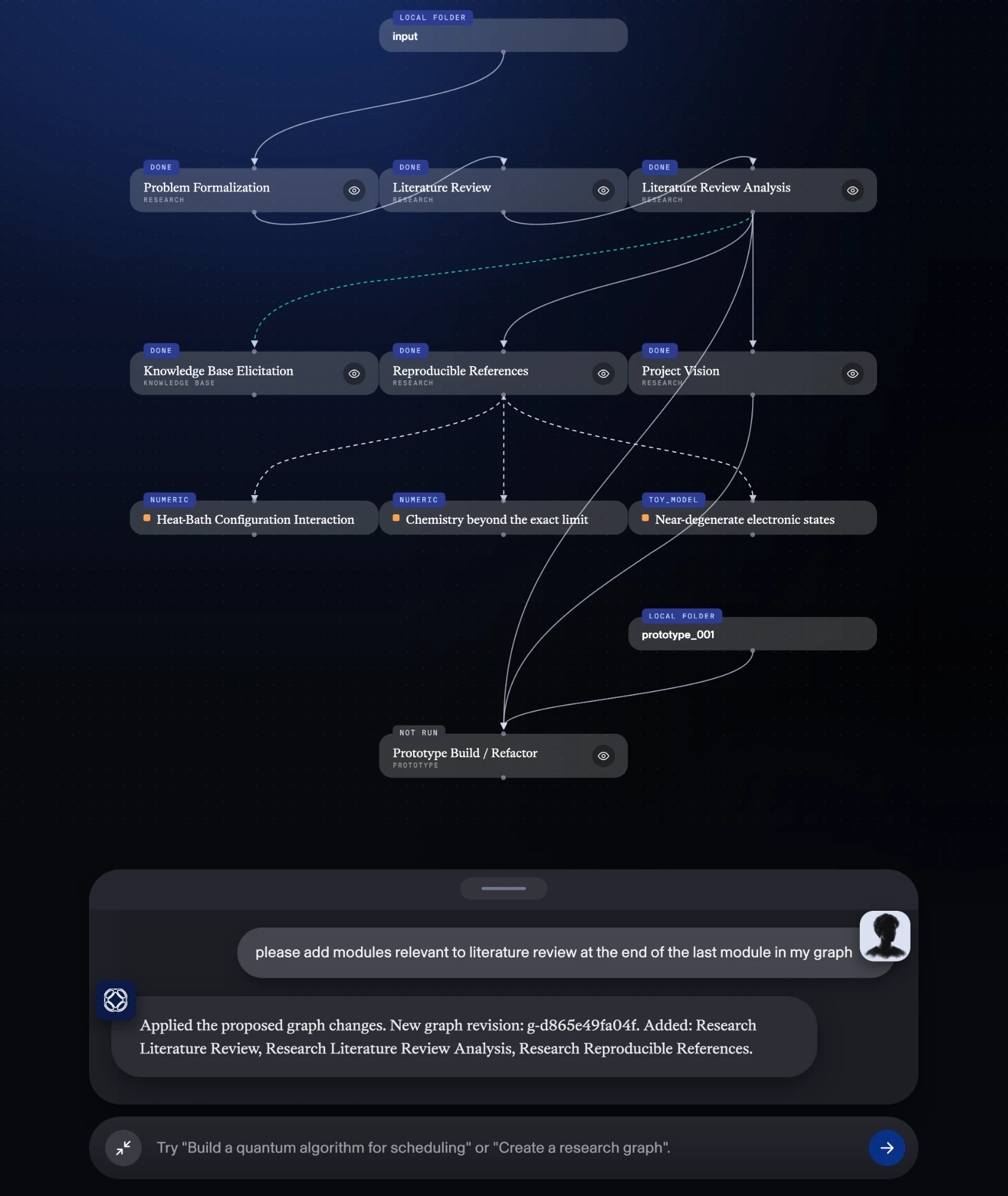
Haiqu AgenticOS structures the work into a graph where each node is a team of specialized AI agents, showing dependencies, decisions, artifacts, and where the investigation branches or loops back.
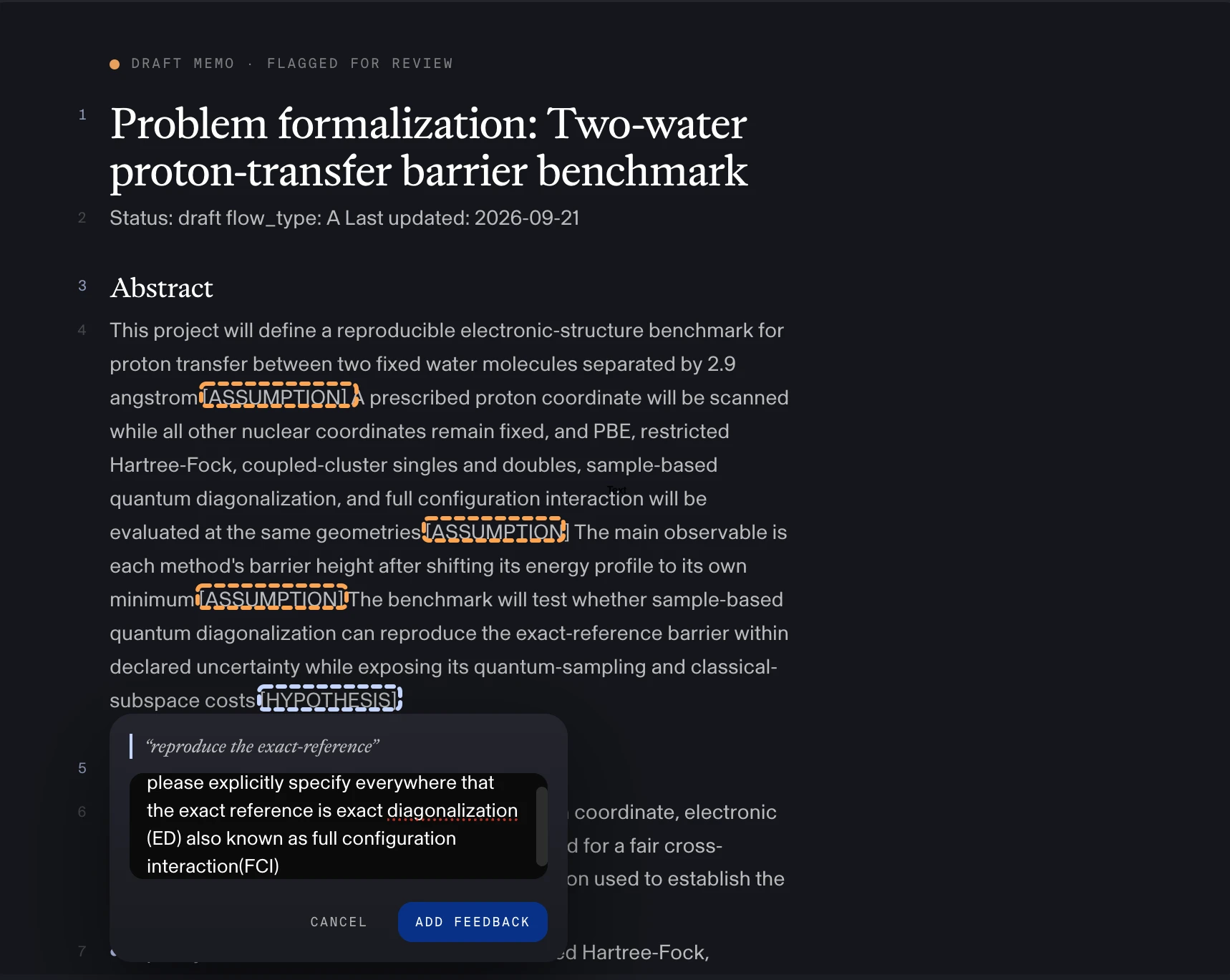
Review artifacts, comment on assumptions, redirect modules, approve critical decisions, and verify results before downstream work continues.
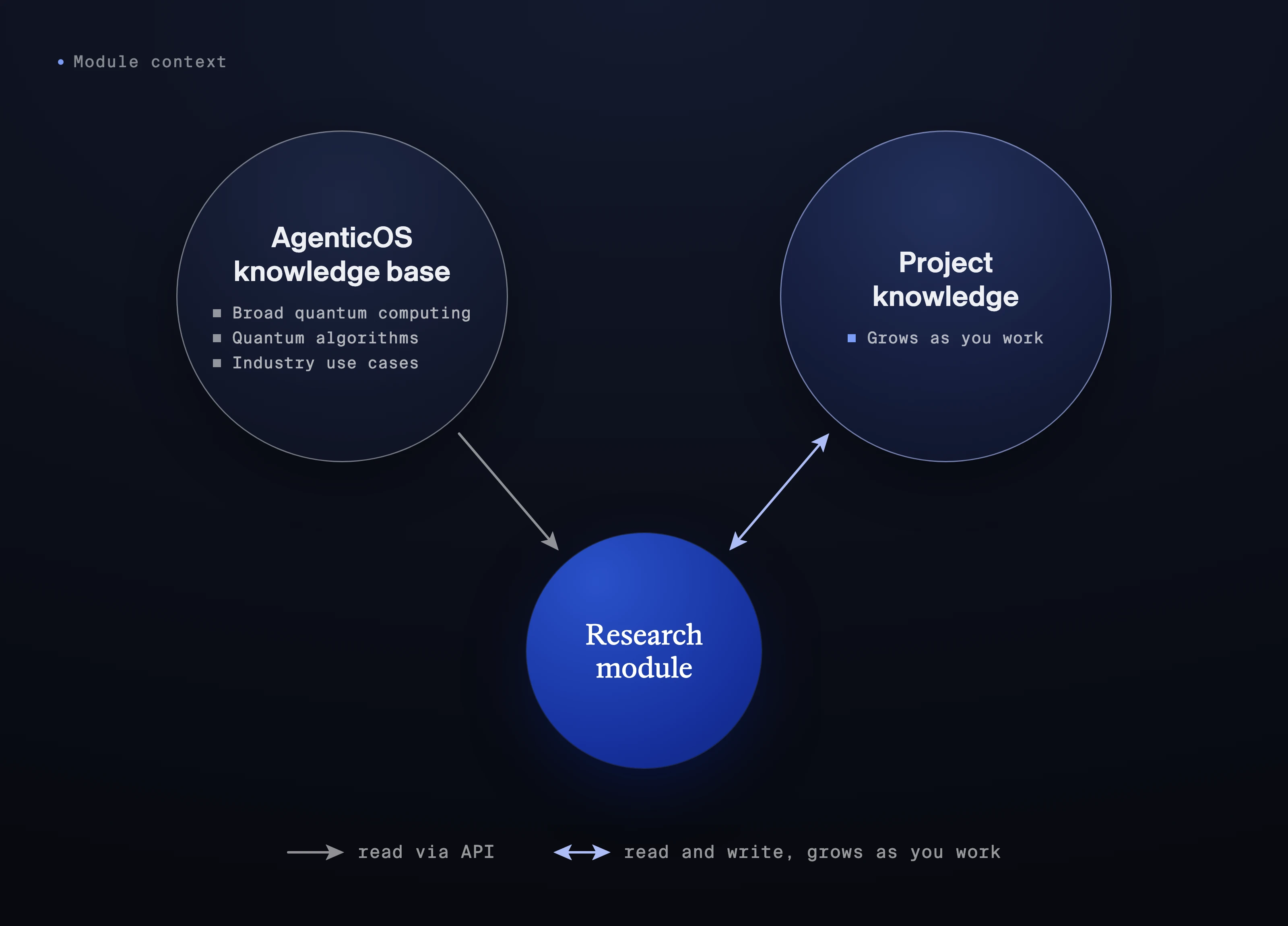
Haiqu AgenticOS reads from a deployed knowledge base of quantum theory, algorithms, and industry use cases, alongside the project’s own accepted decisions and artifacts as work proceeds.
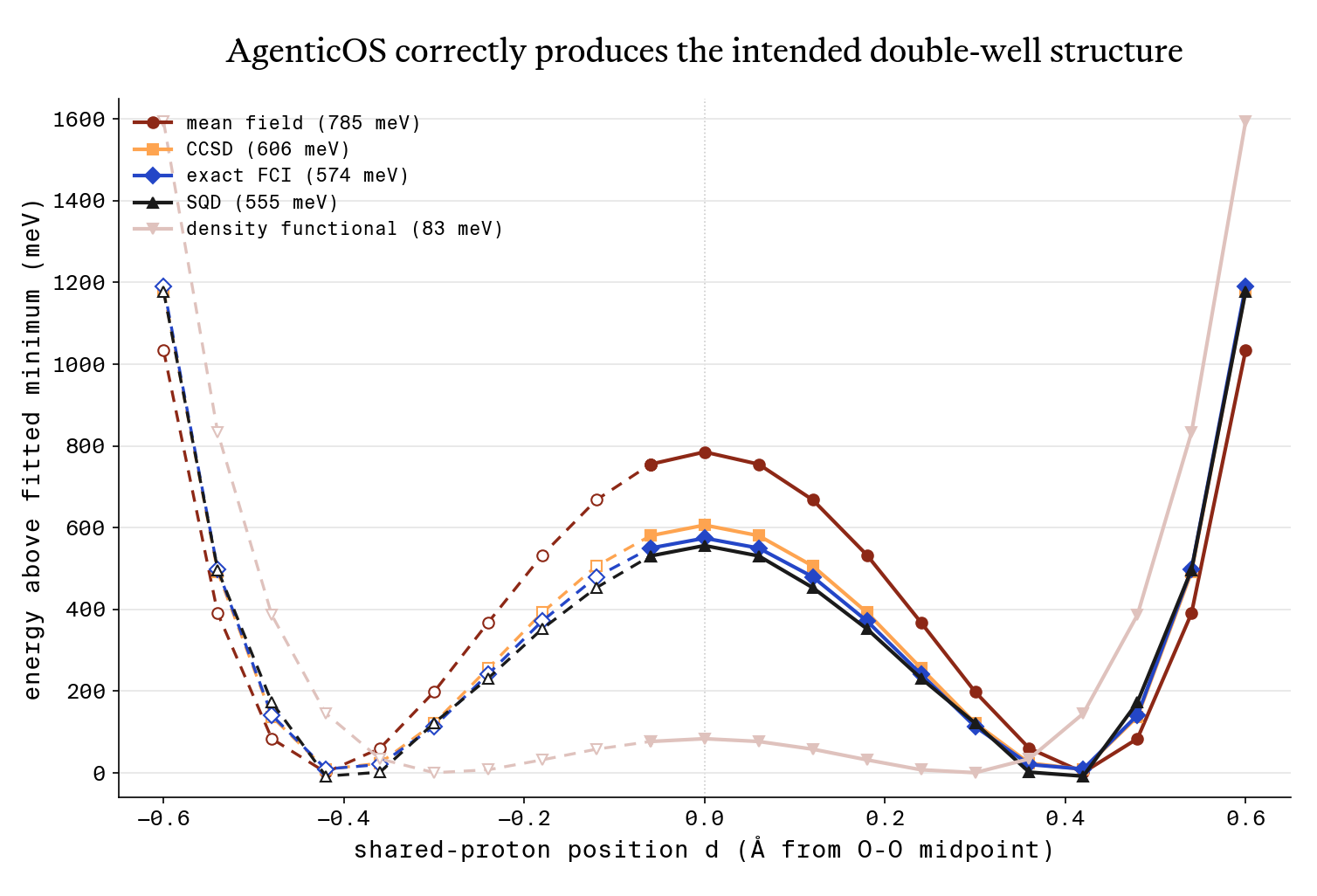
Haiqu AgenticOS, running on a smaller model, produced a verified result, while even standalone attempts on a larger model still silently changed the experiment.
Plausible output is not enough. The experiment has to stay validated.
Read the case study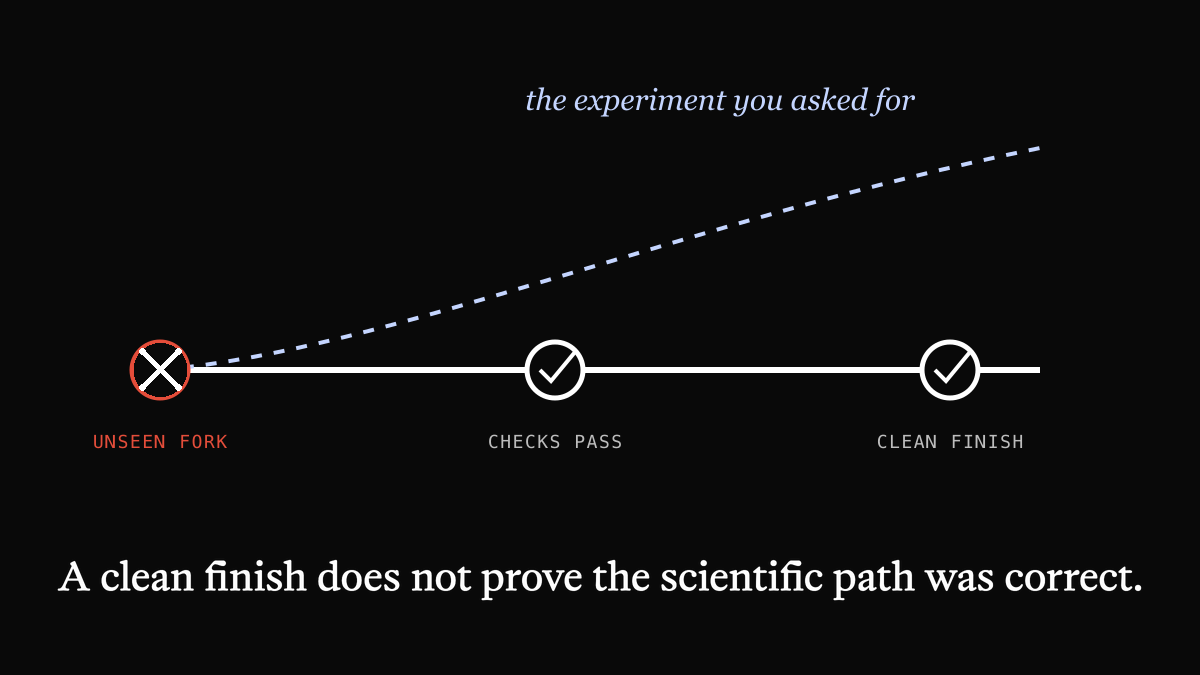
Source: Rahman et al., arXiv:2609.17930
Source: Wang et al., arXiv:2604.11978
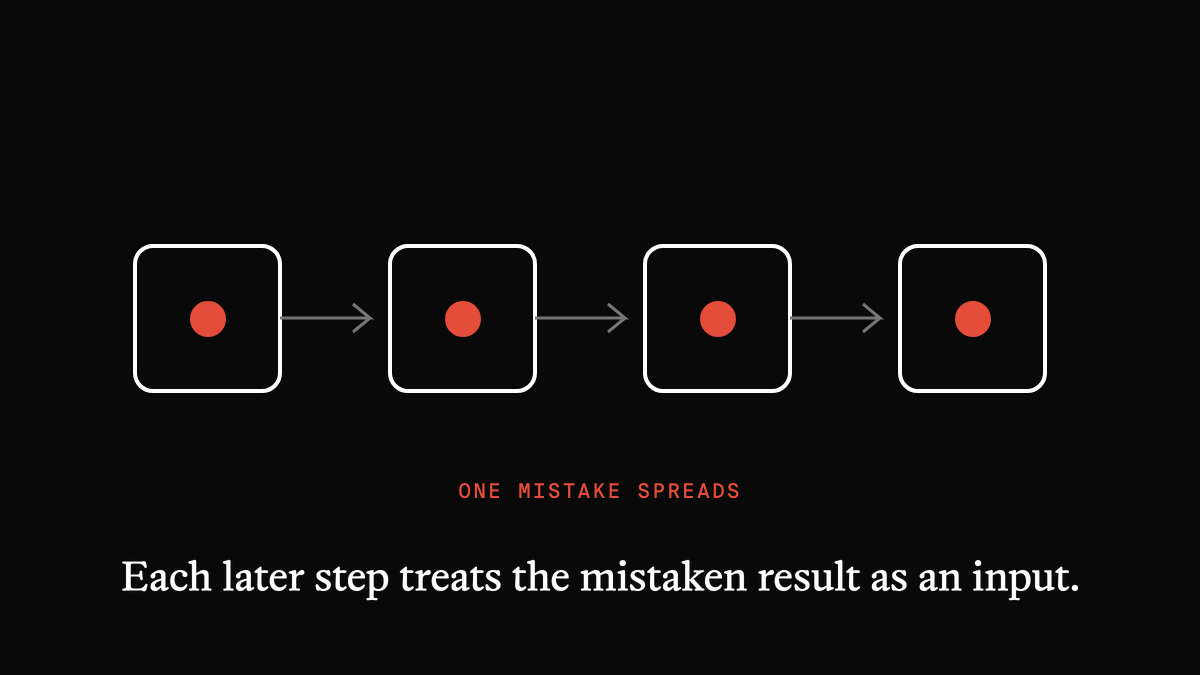
Source: Zhan et al., arXiv:2601.22984
Serious research needs more than intelligence at each step. It needs continuity across the whole investigation.
From live many-body hardware experiments to novel optimization algorithms, Haiqu AgenticOS is designed to turn difficult research ideas into structured, reviewable programs of work.

Krylov Quantum Diagonalization on a 3×3 lattice with diagonal hopping
View KQD hardware case study →
Population-based optimization workflow, simulated at 100-qubit scale
View DCA case study →
Book an intro call
with Sam Kearney, Head of Growth, we’ll confirm your maturity stage, target application area, and success criteria.
Open Calendar